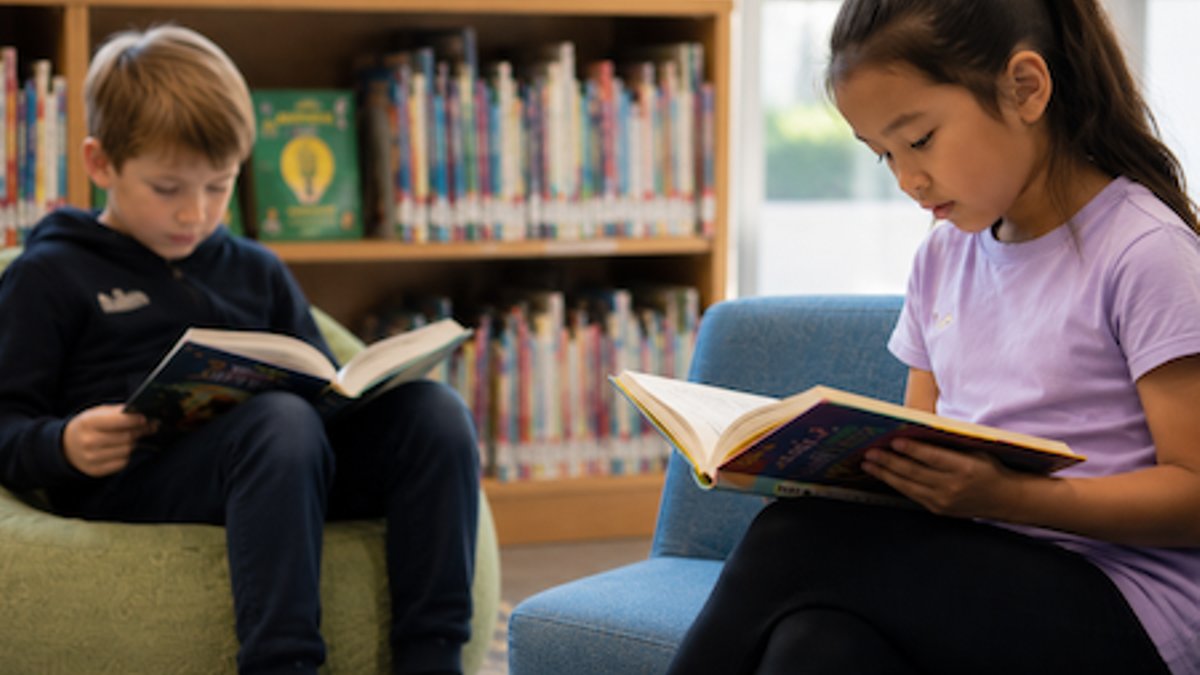
Children are losing a quiet but essential skill: the ability to read deeply.
For generations, stories like “Once upon a time” held kids’ attention from start to finish. Today, classrooms show a shift. Teachers report more students can decode words but struggle to follow a narrative, lose track of characters, or grow restless when a plot takes time to unfold.
Deep reading does more than teach vocabulary. It trains the brain to focus, persist through frustration, and imagine other perspectives—skills that shape how children learn, solve problems, and regulate emotions. These mental tools help people plan, adapt, and stay engaged.
When a child reads a chapter book, they process more than words. They hold earlier events in memory, predict what might happen next, and manage impatience when the story slows. Studies show this kind of reading activates brain regions tied to attention, memory, and flexible thinking. Unlike worksheets or flashcards, stories combine language, emotion, and logic in a way that feels natural.
These abilities don’t develop automatically. If kids spend less time with longer stories—whether reading alone or listening to an adult—they miss the chance to practice focus and stamina. Educators now teach not just comprehension, but how to stay with a story when it becomes difficult.
Classic nursery rhymes and fairy tales, once familiar to nearly every child, are now unfamiliar to many. These stories built vocabulary, stretched attention spans, and introduced different ways of seeing the world. Their decline leaves a gap that screens and short-form content cannot replace.
Parents don’t need a formal program to help. Small, consistent habits work. Reading aloud together—even after a child can read independently—maintains the connection. Letting kids linger in a story without rushing to quiz them on details helps them engage more fully. Rereading favorite books, discussing characters’ choices, and showing reading for pleasure all strengthen the habit.
The real challenge isn’t the method. It’s the pace.
Children’s days are filled with activities, notifications, and quick entertainment. Finding even a few minutes for slow, uninterrupted reading can feel difficult. Yet it remains one of the few ways to develop focus and empathy that will last beyond the final page.
Somewhere in the rush, the invitation to lean in and stay awhile disappeared. The solution might be as simple as four words: Once upon a time.
For those just starting, a basic guide to reading habits can offer practical steps, though the core idea stays the same—consistency matters more than perfection.





Leave a Reply