Launching a product on social media takes more than a simple announcement. You need engaging content, thoughtful planning, and consistent communication to build excitement and encourage purchases.
From sharing early teasers to highlighting customer reviews, each post can help move your audience closer to buying. Here’s how to plan an effective product launch from start to finish.
Why social media is ideal for product launches
Social media helps you reach potential customers, share product photos, answer questions, and build interest through multiple posts rather than a single announcement.
Different formats serve different purposes. Short videos demonstrate products, Stories provide quick updates, and carousels explain features. Mixing these formats keeps your launch engaging and encourages ongoing interaction.
Plan your launch timeline
Organize your pre-launch, launch day, and post-launch phases
Start planning a few weeks before your product becomes available. The exact timeline depends on your product, audience, and launch goals, but dividing the process into three phases gives you a useful structure.
During the pre-launch phase, introduce the problem your product solves, share sneak peeks, and give people reasons to follow along. On launch day, focus on the announcement, product benefits, and a clear way to buy or learn more. After launch, share customer feedback, answer common questions, and remind people why the product is worth considering.
Map every post in a content planner
List the content you want to publish, along with its format, caption, publication date, and purpose. This helps you avoid gaps in your schedule and ensures each post supports the launch rather than repeating the same message. A content planner like PosterMyWall can help you organize your upcoming posts and manage your publishing schedule.
Design your launch content
Share teasers and sneak peeks
Give your audience a glimpse of what’s coming without revealing everything at once. You could show a close-up of the packaging, a small part of the product, or a short video of the final preparations.
Keep these posts intriguing but relevant. A teaser should create curiosity and give people a reason to watch for your next update, not leave them confused about what you’re promoting.
Create launch day announcement graphics
Your main announcement should make the product, launch date, and next step immediately clear. Use a high-quality product image, concise text, and a call to action such as “Shop now” or “Explore the collection.”
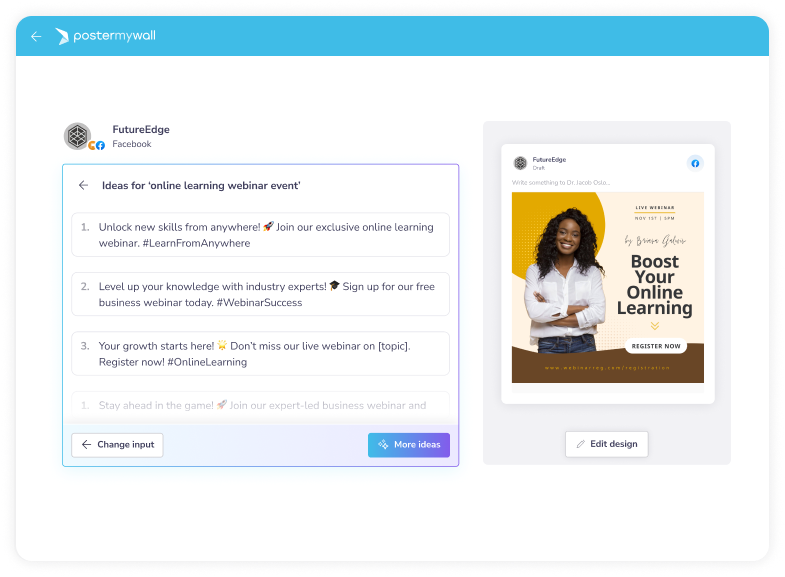
PosterMyWall’s social media post generator can help you create promotional graphics without designing everything from scratch.
Highlight features and benefits
Customers want to know what a product can do for them, not just what it looks like. Create separate posts that explain its most useful features and show how they solve a particular problem.
For example, a skincare brand could demonstrate how a product fits into a daily routine, while a tech business might use a short video to show a feature in action.
Build hype before launch day
Use countdown posts
As launch day approaches, share reminders that help your audience keep track of the date. Countdown graphics, short videos, and Story updates can reinforce the launch without requiring a completely new campaign every time.
Give each reminder something different to offer. One post might reveal a product detail, while another highlights a launch-day offer or explains who the product is designed for.
Show behind-the-scenes content
People enjoy seeing the work that goes into bringing a product to market. Share snippets of product testing, packaging, preparation, or your team getting ready for launch. These moments make your brand feel more personal and give followers a story to connect with.
Offer waitlists or early access
If your launch involves a limited release or a product people can reserve in advance, consider creating a waitlist or offering early access. This gives interested followers a clear next step before the product becomes widely available..
Go live on launch day
Publish your main announcement when your audience is likely to be active, then support it with Stories, demonstrations, or a short live session if it suits your brand. Make sure your product page, checkout process, and links are working before directing people to them.
Stay available to answer questions about pricing, availability, delivery, and product features. Responding promptly can help interested customers make informed decisions.
Keep the momentum after launch
Share customer reviews and user content
Once customers begin using your product, invite them to share their experiences. With permission, repost customer photos, testimonials, or videos that demonstrate the product in real situations.
Authentic feedback can help potential buyers understand what to expect and give your launch content a fresh perspective.
Use limited-time offers thoughtfully
A launch bundle, introductory discount, or bonus item can encourage customers who are still deciding. Set clear terms and deadlines, and make sure the offer genuinely adds value.
Conclusion
A strong product launch doesn’t end with the first announcement. Plan your timeline, create content that explains your product’s value, and keep talking to your audience after launch day. Consistent, useful posts can help turn initial curiosity into customer interest and lasting relationships.
FAQs
1. How far in advance should I promote a product launch?
For many products, starting two to four weeks ahead gives you time to build interest. More complex launches may need a longer preparation period.
2. What should I post on launch day?
Share a clear announcement, product benefits, useful demonstrations, and a direct link to purchase or learn more. Stay available to answer questions.
3. How can I create product launch graphics quickly?
Use customizable templates and a social media post generator, such as PosterMyWall’s free social media post generator, to prepare consistent visuals for different platforms.




Leave a Reply