
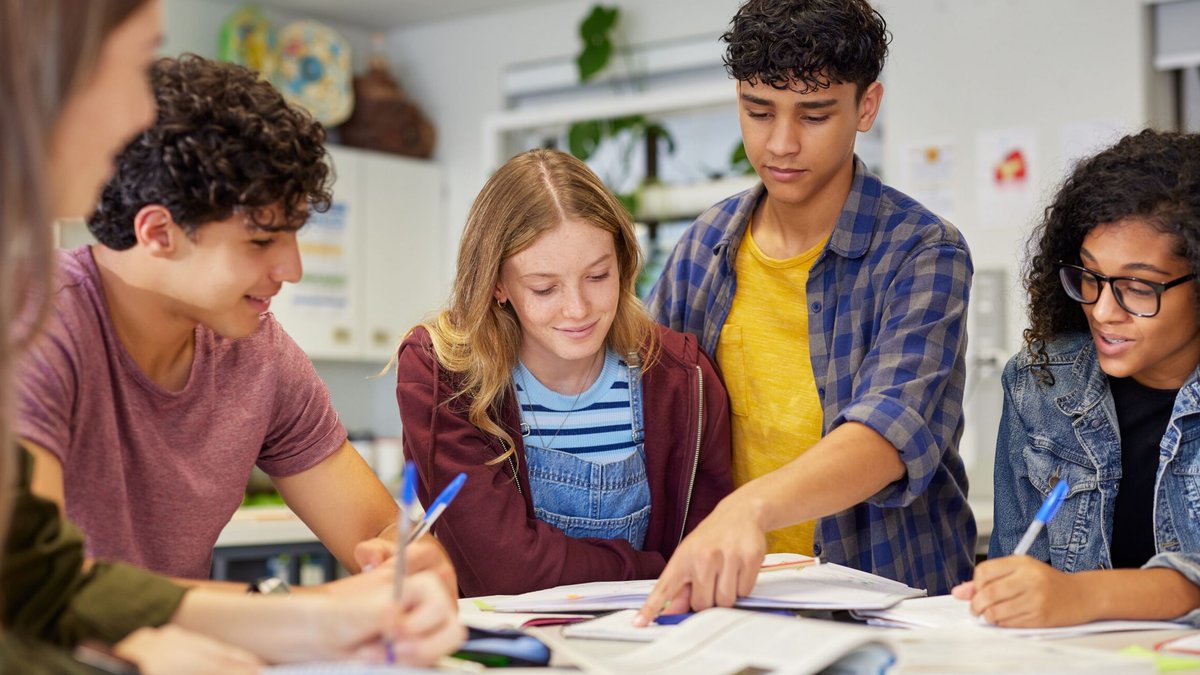
In today’s classrooms, collaboration is evolving from an occasional activity to a daily strategy aimed at deepening learning. A fifth-grade educator observes that when students work together, they move beyond passive absorption to actively constructing knowledge. This approach helps refine their thinking and reveals multiple pathways to solutions.
Taking collaboration further, integrating it across subjects from humanities to STEM, is an ambitious but rewarding goal. It encourages critical thinking, communication, and problem-solving skills, preparing students for a challenging future.
Humanities: Building Empathy and Shared Perspectives
In the humanities, collaborative projects enhance cultural awareness. Students explore background contexts together, deepening their comprehension through discussion. For instance, in social studies, they connect personal experiences with academic content, sharing family heritages and customs while studying global communities.
In reading and writing, collaboration builds necessary background knowledge. Before tackling complex texts, like historical fiction, students work in groups to read foundational articles and record observations. This collective effort enriches their understanding of the historical setting.
STEM: Inquiry and Problem-Solving
In mathematics, collaboration shifts the focus from finding the “right answer” to understanding the process. Students work together on conceptual problems, using tools like vertical whiteboards and digital platforms. This approach, supported by research from Boaler (2016), encourages learning from diverse strategies.
Science instruction benefits from hands-on, inquiry-based learning. Platforms like Mystery Science introduce compelling questions, guiding students through the scientific method. Working in teams, they formulate claims, gather evidence, and reason collaboratively.
Related Post: AI Tools Enhance Math Lesson Planning for Teachers
Organizing learning around central themes connects subjects, making literacy, history, science, and math part of a unified toolkit. For example, pairing science with math allows students to use numbers to solve real-world mysteries, tracking data and spotting trends on whiteboards or digital tools.
This method transforms learning into a shared journey. Whether discussing historical perspectives, conducting science experiments, or comparing math strategies, collaboration helps ideas resonate. By regularly working together, students build confidence, communication skills, and curiosity, preparing them for challenges beyond the classroom.
Mystery Science: Digital Curriculum for Elementary Students
Mystery Science is a fee-based digital curriculum designed for kindergarten through 5th-grade students. It offers an open-and-go format, aligning with the Next Generation Science Standards (NGSS). This platform is widely used in public schools and homeschool settings.
Similarly, integrating science and math enables students to apply numerical skills to real-world scientific inquiries. As they conduct experiments, they use math to track data, identify trends, and solve problems. This approach helps students view literacy, history, science, and math as interconnected tools for understanding the world.
The Impact of Collaborative Learning
Research supports this approach, with studies like Liljedahl (2021) emphasizing the importance of building thinking classrooms in mathematics. Collaborative learning aligns with frameworks such as the Claim, Evidence, and Reasoning (CER) framework by McNeill & Krajcik (2012), which enhances students’ ability to construct explanations in science. Additionally, Johnson & Johnson (2009) highlight the success of social interdependence theory in cooperative learning, reinforcing the value of collaborative strategies.
A National Board Certified Teacher and education writer, who teaches fifth grade in upstate New York, emphasizes the transformative power of collaboration. She continues to advocate for innovative educational practices that transform learning paths.




Leave a Reply