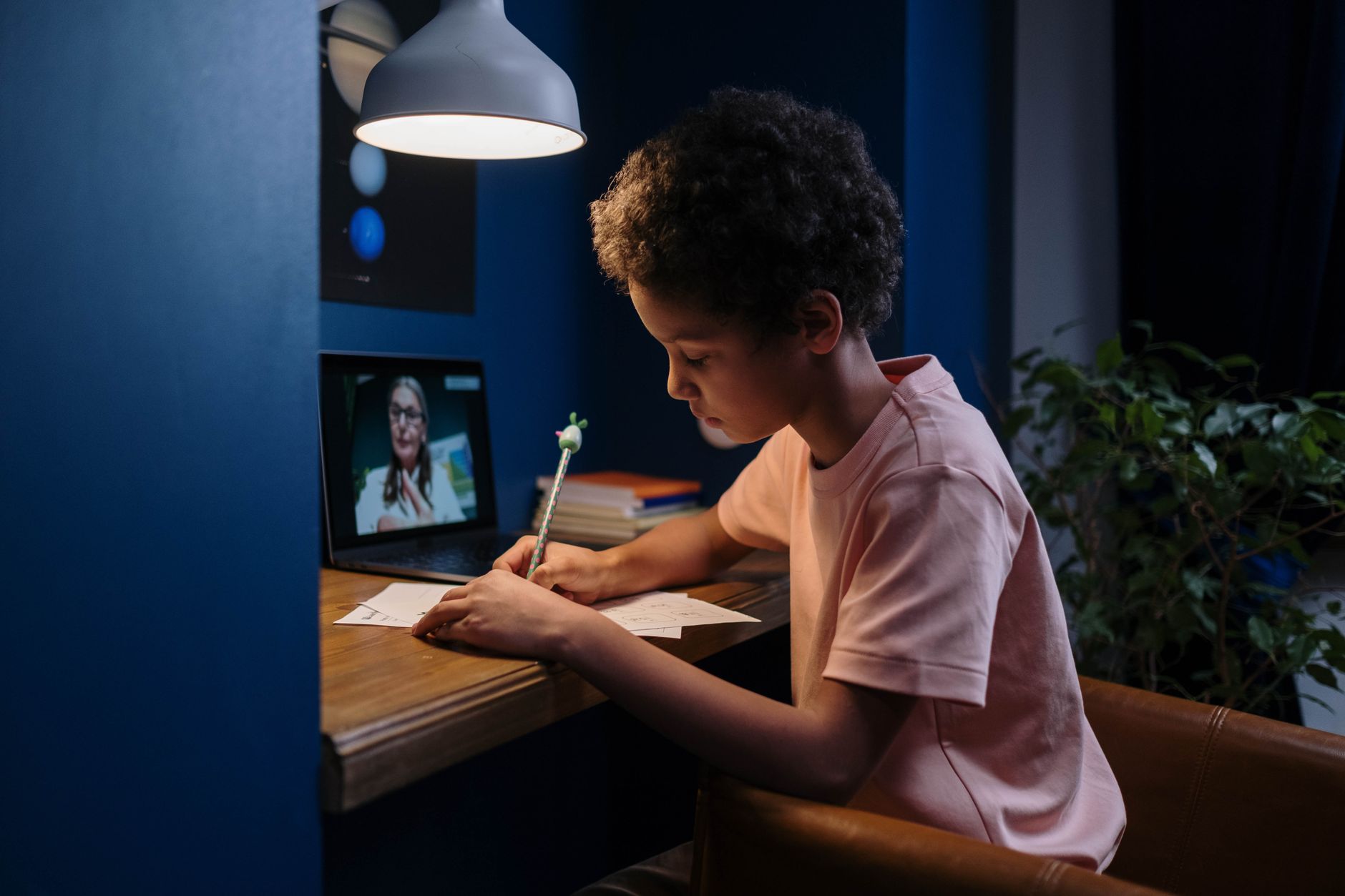
Remote learning has revealed that many students who struggled in traditional classrooms are now thriving, according to teachers who observed the shift during the pandemic.
Classroom trends change when distractions disappear
Montenique Woodard, a middle‑school science teacher in Washington, D.C., recounts how a student once labeled “the class clown” became one of her most engaged learners once classes moved online. “I think not having those everyday distractions in school has really allowed for kids like him to focus on the work and not necessarily all the social things going on because some kids can’t separate that out,” she said.
Related: Teachers Create AI Rules for the Classroom
Other educators echo the sentiment. Holli Ross, a first‑year high school teacher in northern California, described “seeing some of my kids finally find their niche in education.” While many learners continue to face limited internet access and strained home environments, a consistent pattern emerges: the removal of constant in‑person social pressure can benefit certain students.
Self‑pacing and flexible schedules boost performance
Traditional school days often begin at 8:00 a.m. and string together back‑to‑back periods, leaving little room for breaks. During the pandemic, schedules became more fluid, giving students control over when they tackle assignments. Lauren Huddleston, a middle‑school English teacher in Memphis, Tennessee, noted, “I think a few of mine are doing really well getting a taste of more independence. They’re taking ownership a bit more because they’re no longer under the micromanagement of the school day.”
Students themselves report the benefits. One 10th‑grader in Katie Burrows‑Stone’s English class wrote, “The reason I enjoy online learning is because of the opportunity to structure my day efficiently. I am able to workout, relax, and complete the work in a timely manner, with no distractions.”
Related: A Smarter Approach to Educational Technology
Research supports the idea that short breaks and moments of boredom can improve focus and retention, suggesting that the new rhythm may be more aligned with how adolescents learn best.
High school students typically spend at least seven and a half hours a week on homework, on top of extracurriculars, sports, and part‑time jobs.
Sleep patterns have also improved for many adolescents. A high‑school junior in California, identified only as Ingrid, shared, “I have the time to sleep eight hours a night every night [now].” The American Academy of Pediatrics recommends 8‑10 hours of sleep for teens, yet a 2018 study found over 70 percent of high‑school students were not meeting this benchmark during the school year. When Seattle delayed start times by an hour in 2016‑2017, researchers observed better sleep and higher grades.
Related: Six Charts Show Homework’s Pros and Cons
Students report higher satisfaction.
In practice, these changes suggest that remote learning can act as a catalyst for rethinking how education is delivered. Schools might consider incorporating more flexible scheduling, reducing unnecessary workload, and providing options for learners to study in environments that minimize social stress. While the pandemic forced a rapid transition, the experiences gathered could inform lasting reforms that benefit a broader range of students.




Leave a Reply